“The Mocking Stars” by LAUSSE THE CAT
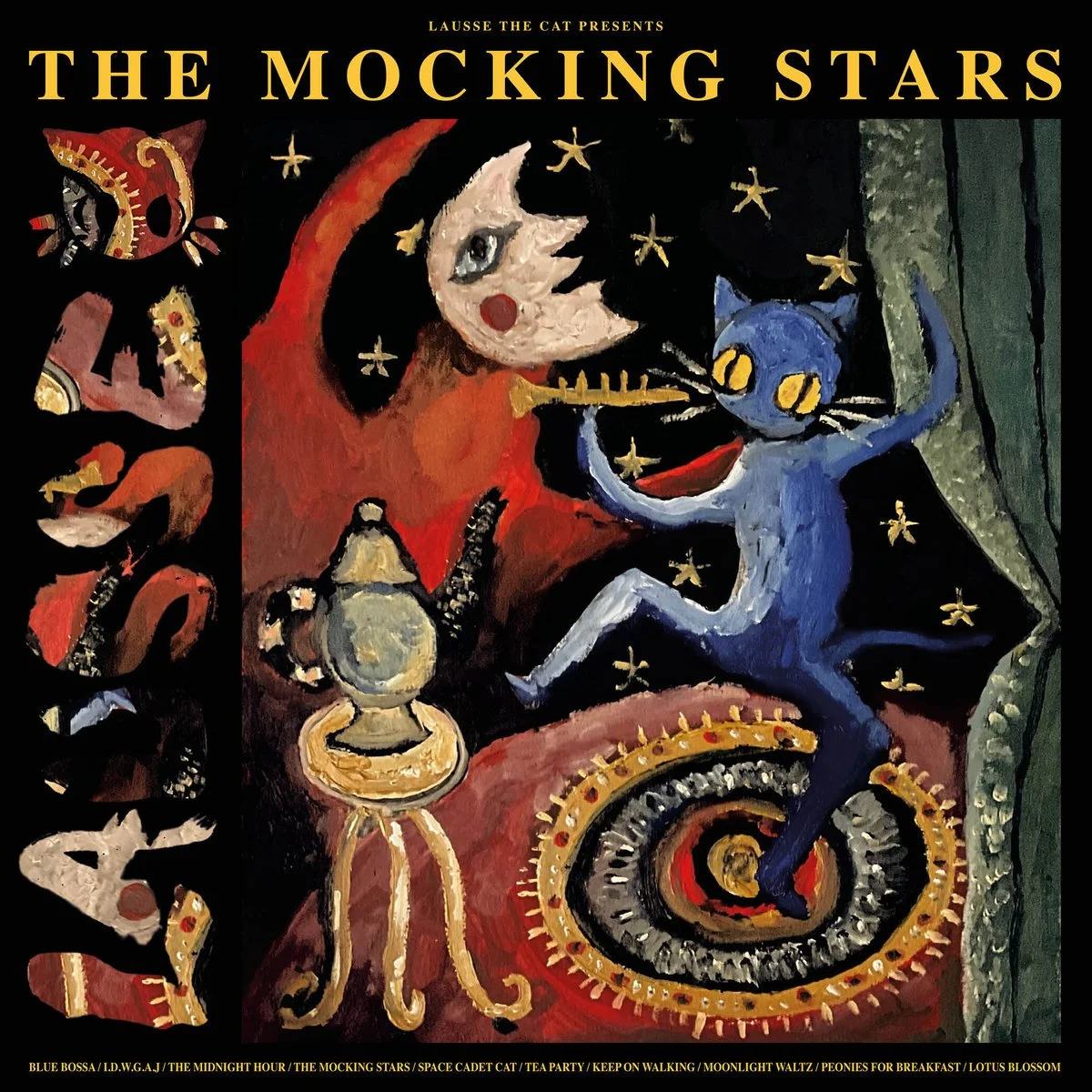
A short preface: having written and posted various book reviews on this website (all of which are reviews of popular science books and thereby lend themselves to a much more formal register), I wanted to explore writing an album review. Being a frequent user of the Album of the Year website, I have often been inspired by reading some of the reviews posted there and have wanted to officially write my own pieces and share my own takes for quite some time now. Having finally found some time, I wanted to share my thoughts on what has been, (naturally) in my humble opinion, one of the most original, addictive, and simply enjoyable releases of this year: LAUSSE THE CAT’s The Mocking Stars. One element of this review that I have been careful to preserve is the intentional lack of formality or criticism of technical musical ability; I am no musical expert, and I don’t claim to be. Therefore, this review, as with all the music reviews that I will write, will be quite personal and informal as I document my own thoughts, emotions, and opinions on the music. If I haven’t bored away everyone already, the review starts now:
Sitting at a bus stop with the pouring rain having caused me to miss my daily 4 PM bus home, scrolling through the “New Releases” list on Album of the Year (the cool cats call it AOTY), stopping at the sight of a bizarrely beautiful album cover, checking the genre of the album and finding it to be Jazz Rap (heck yeah!), and hitting play. I can’t imagine there being a better way to serendipitously encounter this project. From the second the roaring announcer’s voice yells “Welcome Back my Dear Children!” (“Blue Bossa”, Track 1) to the moment one of these “dear children” spots LAUSSE “falling from the sky!” (“Lotus Blossom”, Track 12), I had a stupid smile plastered over my face. Everything about this album is grin-inducing: the acute lyricism, the slick British-accented delivery, the spacey-bubbly (I am a professional critic, as you can tell) instrumentation, the theatrical cut-scenes, the ambient soundscape that permeates the project; The Mocking Stars smells like rum and tastes like caramel.
At its very core, the story behind this project is simple, but done impeccably well. Through the enactment of a play (that itself satirises the themes explored on this project), the album follows a cat (our protagonist and an embodiment of the artist) as he navigates this dreamy, collapsing world and confronts addiction, depression, isolation, and the all-familiar pursuit of meaning. Escapism permeates the narrative as LAUSSE rejects the “Sun” (mundane life) and wrestles with the mocking temptations of the “Stars” and the “Moon” (death and/or eternity).
Without going too far into how personally relevant this project’s story was for me, I found the narrative wholly compelling. Concept albums have a tendency to sometimes descend into an over-reliance on the storyline that connects the tracks and therefore such albums have songs that feel, at times, musically unengaging or repetitive. The Mocking Stars does well to avoid this and while I definitely wouldn’t say that each and every track on this project is flawlessly riveting, each song retains its distinctness without sacrificing the project’s cohesiveness. LAUSSE ensures that you, as a listener, don’t lose sight of the fact that this entire narrative is the enactment of a play.
On a much more personal level, this album uncannily resonates with me across a host of different moods, aesthetics, and emotions. The contrast between the despondent rapping—and more so the despondency of the narrative themes—and the jazz-infused whimsicality of the soundscape transcends novelty. The duality of having the most stirring lines (“For see, the stars are just the dead who sparkle hard to seem alive” - “The Mocking Stars”, Track 5) interweaved with snarky quips (“2030 be prepared, Lausse the Fucking Cat for mayor!” - “I.D.W.G.A.J.”, Track 2) makes this album resonate all the more: it has served as the most fitting backdrop to times of uncertainty, times of exhaustion, times of unmatched, inexplicable glee.
Track-by-Track Thoughts:
1. “Blue Bossa” - 95/100
Amazing opening track that takes its name from a famous Kenny Dorham instrumental jazz standard. The mellow vibraphone guides this track through the surrounding insanity and juxtaposes against LAUSSE’s otherwise-unhurried delivery, giving it a cadence that hooked me instantly. The chorus is immeasurably addictive. The segment with “the Mice” isn’t my favourite (after this, the crescendo into the release into the rapping into the chorus, is the best part of the song) but it’s undeniably necessary to sustain the theatricals of the album. I love the ending segment so much, it sets up the next track perfectly.
2. “I.D.W.G.A.J.” - 90/100
After hearing this, I don’t think I wanna either. With the soundscape being much more rhythmic and brisk than the previous track, this one progresses really well; it builds to the final collective chorus in a really satisfying way. The “pirate’s life” is an interesting motif that does well to encapsulate the life that LAUSSE wants. Again, this one is full of one-liners that make me smile. Great track.
3. “The Midnight Hour” - 80/100
Another very pretty song. I will say that this one had a few moments where I felt as though it was drawing on a very, very similar soundscape to “Blue Bossa” but without as much novelty and charm. However, the soundscape is still enjoyable to listen to, the song’s premise (though straightforward) adds context to the album and does well to antagonise the Sun. The solo at the end was great. The French segments slotted in really well and, as they do whenever they are introduced on this album, add to the silky, oozing sound.
4. “A Dour Sun” - 80/100
My favourite of the two interludes. A reminder of the theatricality of it all.
5. “The Mocking Stars” - 100/100
An incredible track. A title track in every sense. This song somehow manages to be a flawless microcosm of an impossibly detailed and intricate album. The entirety of the narrative—the rejection of the Sun, the ensuing chaos, the rising fury and hate, the release, the taunting laughs, the admittance of defeat, the pleas—is explored in this near-eleven-minute track. The first four minutes of dense narration and world-building allow LAUSSE to take on the role of storyteller without interruption, something that isn’t seen previously on the album. After this, the drop into the synthy, jagged taunting from the “Stars” followed by the LAUSSE’s immaculate, uptempo rapping is truly one of the highlights of the whole project. The back-and-forth dynamics of these verses (with B-Ahwe voicing the “Stars”) is immensely addictive and once again, adds to the theatrical cadence of the track. Finally, for the final third of this song, the tempo slows and LAUSSE sheds his arrogant, hateful register and instead adopts a tone of mellow resignation, swaying between the airy drums and synths to close out this masterful centrepiece.
6. “Space Cadet Cat” - 90/100
A whimsical, jittery piece of electronica that amidst the catchy chorus, Star Wars droid sound samples, and LAUSSE’s contrastingly subdued rapping, explores the escapist themes of the album through the metaphor of fleeing to Mars. Following the immensity of the last song, I found this one to be much lighter and much less dense, a testament to the excellent sequencing on this album.
7. “Cackles of the Mad” - 75/100
An amusing interlude. The clinking of teacups scratches an itch. LAUSSE is seen finally interacting with the “Mad” that the references in the title track. The maniacal yet fanciful nature of this interlude captures the allure of intoxication and the seduction of escapism really well.
8. “Tea Party” - 70/100
This track had potential. I feel as though this is the one song on this project where the jazz and rap elements don’t fuse as seamlessly or as interestingly as they could have. While all the other songs manage to incorporate LAUSSE’s laidback and sometimes sombre rapping into silky jazz instrumentals, this one doesn’t fuse these elements as well for me. Still, I like the overall sound of this track, I like the instrumentals, I like the lyrical direction, though I do think it’s LAUSSE’s weakest performance on this project. One thing in particular that I think would have elevated this piece would have been if the more outspoken, loud chorus wasn’t as muted out with the restrained effects that LAUSSE uses—if he had allowed this louder, almost-shouting chorus to fully emerge, I think it would have complimented the faster jazz elements a whole lot better.
9. “Keep On Walking” - 95/100
I love this track. The integration of an insight into the artist’s actual life experiences through our cat protagonist falling into a slumber is very on-brand with the dreamy soundscape. The extremely simplistic mid-tempo beat is refreshing and over which LAUSSE’s rapping matches the song’s walking pace. That is until the instruments, particularly the strings, are brought to the fore and begin to swell and rise before we drop into another of this album's incredible synth-layered, jagged bridges. This song perhaps has my favourite chorus on the whole project.
10. “Moonlight Waltz” - 95/100
This is what “Tea Party” could have been. This track is similarly shorter and features jazz and rap elements that would feel disjointed if it weren’t for the impeccable delivery. LAUSSE, I believe for the first time, opens himself to a much more outspoken delivery, interleaved with theatrical ad-libs, adopting a whimsical, storyteller-esque cadence that pairs impeccably with the flowing strings and vibraphone. This track ends extremely well, with, once again unlike “Tea Party”, the collective, layered, near-shouting vocals being allowed to take centre stage. The chaotic, synth-layered denouement of this piece is excellent and closes out the track very well. I just wish it was longer.
11. “Peonies for Breakfast” - 100/100
My favourite song off this record. I prefaced this review stating my lack of any professional music understanding and my inability to deconstruct why I love this song will be the greatest evidence of that. Still, I will try. This song does something for me. While I will maintain that LAUSSE’s subdued delivery against the intricate, flowing jazz is a contrast that does, in fact, work throughout this project, it is on this one song, this one track, where this contrast evolves into something greater. At its essence, this is perhaps the saddest song thematically and yet the blaring, skipping trumpets, the whispered “bum-bum-bum”s, and the airy drum kicks juxtapose the theme brilliantly. Here, LAUSSE resigns to the fact that it is not the oppressiveness of his external world—not the capitalism, the futility, the pervasiveness, the hypocrisy, the madness(!)—that restricts him, it is his own self-destructive nature. The song follows his realisation that even with a girl that makes him smile, that “sweeps away the dark”, contradicts all things that LAUSSE loathes about the world around him, he finds himself loathsome. LAUSSE detests the girl because in clearing the darkness of the world, she reveals to him that the darkness resides within him. LAUSSE is not blinded by this, he accepts it, but finds himself unable to find solace in such a relationship—his extended relationship with his reality—and tries to escape. The final swelling outro of this song is amazing: it erupts with this layered, screaming plea against the world as LAUSSE grapples with the fact that he may never truly have peace—that as soon as his watered plant begins to grow “fat and happy” under the “Sun”, LAUSSE himself will find some way to drive the “Sun” away and throw shade on his “blossoming tree”.
12. “Lotus Blossom” - 85/100
Closure. Sonically, a great piece; much more synth-heavy and less jazz-infused, which I actually don’t mind. The rating for this track is largely influenced by the fact that it serves a well-rounded ending thematically. LAUSSE accepts the melancholic truth of his reality but also seems to find some solace in the fact that by continually trying to navigate such a world, he finds his own truths and meanings. It is this sense of self, sense of understanding, sense of resigned acceptance, that the “Stars” can never take away from him—“For Lausse slept sound in his newfound bed and not even the dead mock those who try.”
Favourite Tracks: Peonies for Breakfast; The Mocking Stars; Keep On Walking
Overall Rating: 93/100
